 MICHAEL
SCHRADER
MICHAEL
SCHRADER
WRITE-IN CANDIDATE FOR
MAYOR OF THE CITY OF RACINE

Racine ,
Wisconsin
53402
(website administrator/creator:
M. H. Schrader)
Working For A
Better Racine
WANT TO HELP MICHAEL? WANT TO SHOW YOUR SUPPORT? CLICK THIS LINK TO E-MAIL HIM AT drschrader@t2s2.org
SITE
MAP
A message from the
candidate
What is a write-in candidate and why vote for one?
Why is
Michael Schrader the best candidate?
Five pledges
Important Issues
Other Links
The Fine Print, the musings of Michael
Schrader
A Brief
Biography of Michael Schrader
Dear
Fellow Citizen,
As a write-in candidate for
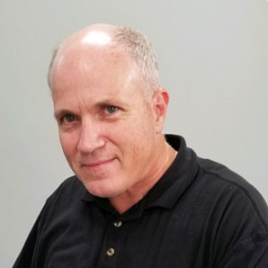
My name is Michael Schrader. I am 56 years old and a happily married father of nine, host father of two, and grandfather of four. I have been a Civil and Traffic Engineer since I began my undergraduate studies in August 1984, with a Bachelors Degree in Civil Engineering from the University of Missouri - Columbia (December 1987), a Master's Degree in Civil Engineering from the University of Tennessee, Knoxville (May 1990), and a Ph.D. in Civil Engineering from Wayne State University in Detroit (March 2018), as well as graduate level coursework in History and a couple of years of law school. I have spent my career in ten different states working for municipal, county, regional, and state agencies, as a private engineering consultant, and as a university professor; thus, I have a very wide worldview, which is crucial in making the right call, especially when other peoples' money and lives are at stake. I currently work as a traffic engineering consultant and teach transportation engineering.
In addition to being an engineer and an academic, I have engaged in a variety of activities and jobs that one would not normally think an engineer would do. I have written an opinion column since 1994, and have dabbled in
politics and the political process on occasion. I have also been a: journalist, radio
personality, surveyor, substitute teacher, barricade laborer, motel desk clerk,
construction inspector, pizza delivery guy, warehouse worker, custodian, and tutor. In short, I have a wide variety of life
experiences which I believe gives me the unique ability to understand many
different points-of-view and makes me the BEST candidate for
What is a write in candidate and why vote for one? A write-in candidate is a candidate whose name is not printed on the ballot; instead it must be written in. In the state of Wisconsin, a write-in candidate must be registered an an official write-in candidate, and only votes for official write-in candidates are counted. When writing-in a candidate, you must write in the name that matches what is officially registered in order for your vote to count. To vote for me, you must write in MICHAEL SCHRADER; variations like MIKE SCHRADER or M SCHRADER will not be counted, and my name MUST be spelled correctly, both first and last.
So why bother, as write-in candidates never win, right? Well, actually, they do. Two U.S. Senators, one being current Senator Lisa Murkowski, were write-in candidates. Rodney Smith, a mayor of Columbia, Missouri, which is larger than Racine, was elected as a write-in. Write-in candidates tend to be independent thinkers and not part of the "good ole boy" network, so those that are elected have a free conscience to do what is in the best interest of their constituents, without the entanglements of quid pro quos. Write-in candidates, like Mayor Smith, are just common people trying to make things better. Look at the tens of thousands of dollars that the local establishment has spent on promoting their candidates for mayor of Racine, a city of 77,000. Asinine, isn't it? The idea is that only the wealthy, elite, and well-connected should actually be allowed to run things, and the common folk should just accept it and be grateful for whatever crumbs we get while the cronies get rich off our money and nothing ever gets done. This is one commoner that does not agree with that! As a working person, I don't have tens of thousands of dollars to compete with the elite who believe they deserve to run the city, but I do have intelligence, common sense, a work ethic, and respect for other people regardless of race, gender, birthplace, and social class.
What is my philosophy? My philosophy is a "good government" philosophy. Government should focus on performing only those functions that private citizens cannot reasonably perform by themselves - public safety, public works, public health, and public utilities - and should perform them exceptionally!
Public safety - police and fire. We not only need to have the correct number of officers, but use them smarter. We hear about how Racine is low on officers per person, but as our neighboring village of Caledonia can attest, it is not necessarily the number of officers per capita that is important, but the geographic area that each officer is assigned to; the larger the geographic area, the larger the response time. Many people crammed into a smaller area will not need as many officers per capita as a less densely populated area does. You will hear one of the other candidates use the officers per capita statistic to justify more officers, but that is not really valid. What is valid is that like Caledonia, each officer must cover too much geography, causing an increase in response times, and that is why we need to ensure we have the proper number of officers. Not only is the number of officers important, but where they are based is too. Racine is bisected by a major rail line with most crossings being at grade. The problem with this situation is that there are many times during the day where you cannot get from one side to the other without a long and time consuming detour due to the trains blocking the crossings. It is much more efficient to have fully-functional police precincts on both sides of the tracks so that this issue becomes moot; to do that requires a financial commitment to the police department for buildings, equipment, and staff, both uniformed and non-uniformed, that is not currently there. How do we do this without raising taxes? Simple - we operate smartly by using our resources better. One way we can do this is eliminate petty laws, such as the nonsensical "opposite side parking" law, and other such petty laws which take law enforcement away from preventing crime and keeping the population safe. Instead of having separate police and fire departments, all emergency services should be combined into a single unified "Public Safety Department", eliminating unnecessary duplications and enhancing dispatching efficiency. Of all of the places I have lived, the very best emergency response I have ever gotten was in a city with such a unified department. In the cities with bloated bureaucracies for police and fire separately, emergency response times tend to be worse. In an emergency situation, seconds can be the difference between life and death.
Public works - streets; traffic; right-of-way maintenance; bike and pedestrian trails. There is actually a connection between public works and crime. Cities with transportation infrastructure that is in disrepair have more crime; after all if the city doesn't care about itself, why should people care about it? Poor signals lead to red-light running and other poor driving behaviors as well as car-jackings and other criminal behaviors, and discourage people from following the rules and laws. A poorly maintained street system is unappealing to prospective businesses and residents; who wants to invest in a city that does not invest in itself? Under the current guidance of the mayor and common council, Racine's streets are poorly maintained, the signals are poorly timed, streets are made hazardous with short-sighted plans such as converting Wisconsin from one-way to two-way creating sight obstructions where there were none, confusing striping, and adding angle parking, which is deadly to bicyclists and pedestrians. With the conversion of Lake, the city has removed needed parking and added unneeded stop signs that motorists just roll through after having been warned about it. The current administration and council ignored these warnings. Do we really want a person who knowingly made a street more dangerous as a sitting member of the council and as mayor to be rewarded? There is more! The city has actively encouraged people to rake leaves into the gutters, knowing that the leaves will impede the flow in the gutters and cause flooding, which during cold temperatures causes dangerous icing conditions. Speaking of cold precipitation, there is absolutely no excuse that a city that gets as much snowfall as Racine does does such a poor job plowing. And no, parking on the street is not an excuse, as I lived in Michigan where people parked on the street yet magically the streets were plowed well. No excuses.
Public health. When we think of public health, we think of vaccinations and mask mandates, but there is so much more to it. What is it not - it is not an overpaid, pointless "violent crime preventor person"; there are absolutely no connections between a person's health and desire to commit crime, and to claim that there is, and that crime is somehow a "public health crisis", is ridiculous. Our health is related to our life choices, plain and simple. Since a healthier population attracts businesses and reduces overall societal costs, what can the city do to promote good life habits? Discourage bad behaviors such as excessive drinking, for starters. How do we do that? Encourage bars to close earlier. Since the state allows one alcohol permit for every 500 people, geographically space those who sell alcohol so that there is no overlap in the five-hundred people they serve. Aggressively enforce liquor laws, which will help reduce alcohol related crime and drunk-driving. It is not just what we eat and drink that determines health; exercise, does to. Construct a proper and well-connected bicycle and pedestrian infrastructure to encourage biking and walking. Eliminate e-scooters and e-bikes, as they discourage walking and traditional biking - you know, exercise! Improve street lighting to make pedestrians and bicyclists more visible and safe at night. Build and maintain good parks, not ones built on old cemeteries like Roosevelt or brickyards like Lakeview where we are exposing people to biological and chemical hazards. Properly time and space signals so people who want to exercise can cross the street without fear of death. And, of course, maintain preventative measures like free vaccines (because they actually work), and proper grading of parks and roadway ditches to prevent pooling of stagnant water and the inevitable mosquitoes that come with them.
Public utilites. Did you know that the Romans had running water and indoor plumbing, with fresh water transported hundreds of miles to the city wastewater carried off in sewers out of the city? The Romans understood the importance of providing water and wastewater services to the people by the government. Yes, utilities around the country have been privatized for the sake of privatization, but since the private sector always chooses profit over people, is this really wise? It was only after Charleston, WV, privatized its water utility that it became contaminated with chemicals so toxic that 100,000 could not even shower for over a month without having to travel to a different county. It was only after Flint divorced itself from the regional public water system that it had problems with the lead leaching into the system. We have high quality public utilities, but they have been neglected, as water and wastewater are not as "sexy" as boutique hotels. Transit services are also a public utility, vital to the health and long-term viability of the community. We would not want unqualified political hacks to run our water and wastewater systems, and we should not have that for our transit system, either.
Why am I the best candidate for
I hope that you
will find my site to be informative, and will illustrate what I will do as your
Mayor. If you agree with
these ideals, then I hope I can count on your vote. If you would like to help
promote these ideals through my campaign, please tell your family, friends,
coworkers, and neighbors. If you would like a sign at your home, or would like
to help with the campaign, you may contact me at the above address or by
clicking here.
Michael
Schrader
Candidate for Mayor of the City
Five
pledges of Michael Schrader --
If elected, I will strive to make Racine
Accessible
for citizens utilizing City services. Citizens
should not have to spend hours upon hours figuring out who to call to get a
problem addressed, be it reporting a road hazard, having a utility bill
question, or retrieving a public record. Furthermore, city officials should be
prompt and courteous when interacting with the public, and should make every
effort to answer each and every question or concern. A citizen should not be dumped to voice-mail or e-mail
purgatory, never to have his or her concern see the light of day. Finally, a citizen should never have to suffer the indignity of having to ring a doorbell and yell through a speaker to interact with the Mayor's Office. I promise my door will be open.
Accessible
for businesses. Currently,
In order to spur business
development, we must make it easy for potential businesses to obtain
information on the many wonderful assets that
If
elected, I will strive to make Racine
In the private sector, business managers and
employees are accountable to the owners and stockholders who have a financial
investment in the success of the business, and if the owners are unhappy with
their performance, then the managers will no longer be managers.
If
elected, I will strive to make Racine
Because taxpayer dollars are readily available,
If
elected, I will strive to make Racine
If elected, I will strive to ensure equality to
If
elected, I will strive to make Racine
Does it seem sometimes that you are not aware of what
the city is doing until after the fact?
It seems that way to me! Conversion of streets from one-way to two-way. Taxpayer bribes for an unnecessary boutique hotel. New administration positions for sitting council members. TIDs. A new public health clinic a mile from the hospital. Taxpayer bribes to private companies for affordable housing on a brownfield. That is just within the past two years! Alarming, isn't it? These are all issues where the city may have
complied with the letter of the law, but not the spirit of it. Why the rush?
Other cities will read proposed actions at three separate
council meetings, to ensure that every citizen has an opportunity to speak
up. Other cities do not limit the amount
of time citizens can speak.
Other cities ensure that public hearings are properly posted on
agendas. Other cities have objective
criteria for selecting members to boards, authorities, and commissions. All of these ideas reflect TRANSPARENCY.
I believe that your government should
be TRANSPARENT with you, as it belongs to you, and if elected, will work to ensure
such TRANSPARENCY.
IMPORTANT ISSUES
A community's history defines its present. To understand where we are and what we can do, we must
understand where we came from. To do
that, we must value history and historic preservation.
Economic
Development
is the most important issue facing
Privatization is NOT a four letter word!
(Actually, it's a 13-letter one.) Privatization, if done correctly, can spur
economic development by providing much needed revenue for businesses. If a
A good transportation
infrastructure is very important to attract people and businesses to
Public Safety Speeding and reckless driving are endemic
throughout
Changing The
Government
Our current form of government is a fifteen-member Common Council with a full-time Mayor with a bloated administrative staff who do the work while he jumps from photo-op to photo-op and blows money on Christmas Cards for residents, which is great except for people who happen to not be Christian, but then they don't really count, do they? Fifteen members - that is more than Los Angeles, which last time I checked, was just a tad bit larger than Racine. Fifteen!! So very inefficient! But, hey, it is taxpayer dollars, so who really cares? Let's shrink that down to seven, and as far as the Mayor is concerned, either act like a full-time mayor and actually be in the office working so you don't need all that staff, or become a part-time mayor with a 90 percent reduction in pay. Better yet, perhaps a merger with either the county or one of the other municipalities is in order, as it would reduce redundancy. Maintaining the status quo is asinine and a waste of money.
Parks and
recreation opportunities
are important to the quality-of-life. However,
not all parks are created equally! There were two parks that were originally platted when the city was created - the one on Park is still there, but the second one is no more and is part of the functionally defunct Gateway campus. Some of our current parks have dubious histories. Lakeview Park was a brickyard, which means it is basically a contaminated brownfield with a contaminated building. Yes, the building will be torn down, but the contamination will linger; it is part of the soil. Yet, we think this is an ideal place for children and poor people to play! Roosevelt Park was a cemetery. Were the people buried there moved? I don't know. Contaminated. Pershing Park is a landfill. So is Knapp Park. Lincoln Park is part of a floodway, which means it is contaminated, as the Root River is contaminated. The never ones on the brownfields are basically useless as functional parks. This is a conundrum - the only available land is contaminated, and do we really want our loved ones exposed to it? As a former environmental engineering professor, I promise that I will look into the past land uses of each and every park and suitable sites for new parks, as we do not want to go back to the "good old days" where people picnicked in cemeteries. The ability to exercise and recreate is a public health concern.
Snow Removal For a city that gets as much snow as we do, the snow removal is terrible! Why? For starters, the Public Works Department is understaffed, meaning workers are forced to work mandatory overtime for snow removal, and the more hours we work in a shift, the worse quality becomes. The city should hire some of the numerous private plowers to do the residential streets while focusing on the arterials and collectors, or hire more people to get the job done without overworking the employees.
Boards and Authorities If you look at a list of boards and authorities, you will see the
same names come up time and again; in fact, you will see the same person sit on numerous different boards. While this is legal, it is not really a good idea, because how can you fairly represent competing interests? You really can't. We saw this with the recent library kerfuffle, where a member of the library board is also on the council, and the two group were in conflict about giving the employees raises . There
are 77,000 people in
Zoning
and Land Use have a major impact on
quality of life. After all, who would
want to live next to a rendering plant? Or live where a rendering plant once was? Remember Love Canal, where they built affordable houses and a school on what used to be a toxic waste dump and then people starting getting sick and dying? The new "affordable housing" on Lake Street is our own Love Canal! When they say they cleaned up a brownfield, like the site of the new housing, to acceptable standards, what they fail to mention is that the official standards have been so watered down that they are practically useless! Yes, the site has been "cleaned", but it is not clean, and will not be for many years until all of the toxic chemicals break down, if they ever do. The city is basically putting working people on a contaminated reservation, because if working people get sick and die, who really cares, right? We should always go back into the past and see what land was used for before deciding what it can be used for. Want to know why your property tax keeps going up even though the mayor says it is not? Simple - upzoning. My single family house is zoned for multifamily and commercial use; with a higher zoning classification, it is worth more, and the tax rates go up. The city needs a thorough evaluation of zoning and land use of every parcel in the city to get the true value. A piece of property that was used as an industrial site has little value due to the contamination, and zoning should be done accordingly. We also need to downzone properties like mine to get them into the proper land use and zoning classification. This will be hard, as taxes will decrease, but it is necessary. Enough is enough with the falsehoods.
A Brief Biography of
Michael Schrader
Age: 56
Occupation: Lead Civil Engineer, Gandhi & Associates, Inc., Chicago. Adj. Professor, Dept. of Civil and Environmental Engineering, University of Wisconsin-Milwaukee. Co-owner, Misha's Treasures, Franksville.
Family: Husband, son, father (9), and grandfather (4).
Experience with government: Field Engineering
Assistant, Missouri Highway and Transportation Department; Special
Projects Engineer, Springfield, Illinois; Traffic Operations Engineer, Little
Rock, Arkansas; Civil Engineer, Metroplan,
the Council Of Governments of Central Arkansas; City Engineer and Public Works
Director, Cabot, Arkansas; Senior Transportation Planner, Dallas
County, Texas; City Engineer and Director of Public Works, Planning, and
Economic Development, Balch Springs, Texas; Traffic Control Engineer, Tulsa,
Oklahoma; City Traffic Engineer, Charleston,
West Virginia; Engineering Instructor, Wayne State University, Minnesota State University - Mankato, Gateway Technical College, University of Wisconsin-Milwaukee
.